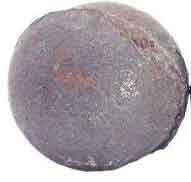
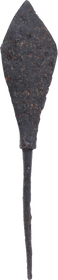
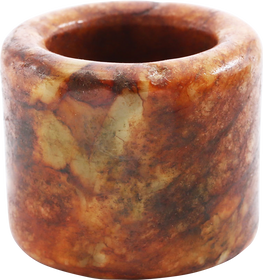
Just 5/8 outer diameter. Cylindrical with chamfered edges for a crisp release as with the adult examples. Probably made for an infant. (read more)
|
|
This one dates to the Edo Period. Principle fabric sound with a few small wear holes to the back. Some moth damage to the wool mon. The fine silk lining tattered in places but complete. (read more)
|
One piece dome hide skull with central hole (tehen) at the top, finely formed and preserved. Separately attached flared brim pierced for attacking the articulated shikoro (neck plates) with original filler as the entire exterior was lacquered as one ... (read more)
|
Split mouth piece with double rings to each end which secured to the headstall and leads. Heavy construction. Medium old raised surface rusting. (read more)
|
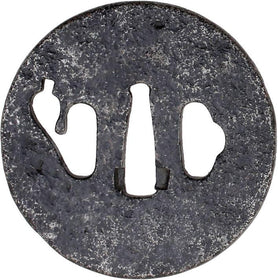
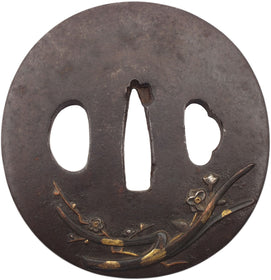
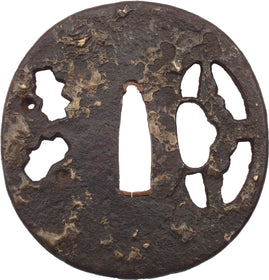
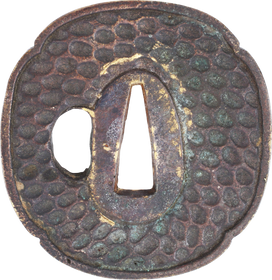
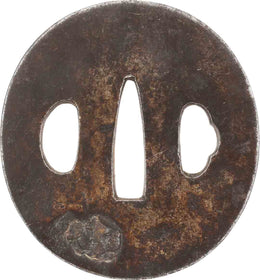
Circular with thick plate tapering toward the edge. Gold and silver inlaid foliage and mon. Crisp nine character signature. Inlay about 50% complete. Some raised surface rusting on glossy original surface. 2 3/4 dia. Edo period. (read more)
|
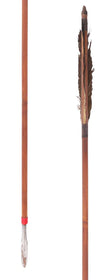
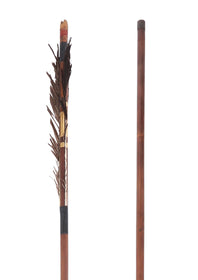
37 3/4” length with dark cane shaft and wood nock. (read more)
|
Made for a pony or small horse with 7 1/4 bit width. Circular sided rings with plain crosses and plain connector bars. Medium old rust growth overall. Sons of Samurai trained for warrior status from the earliest age and this bit would have served a boy i (read more)
|
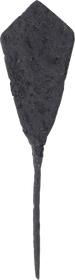
This is an extremely rare Japanese Samurai arrow of the Edo period, 1602-1846. It is fine quality with a horn nock and spotted goose fletching.
(read more)
|
37 3/4” Length with dark cane shaft and wood nock. Large brown fletching of the form shown on instruction manuals of the period, secured with black paper wrap. (read more)
|
18th century. Matching for form and proportions. The side rings with ridged medial bars and raised lug to the connecting bar. Old raised rust growth overall. Untouched and should re polish with ease to a fine crisp example. (read more)
|
Forged iron in eight interlocking segments. 9 width extended as used. Heavy side rings with ridged medial crosses. The connecting bars each with chiseled diamond with punched corners. (read more)
|
Similar size and proportions but more delicate construction. The side rings of slightly tapered form with rounded corners and round bar cross. Connecting bar with a raised lozenge form lug. Stable inactive old surface rusting overall (read more)
|
18th century. Especially heavy example with near square side rings with ridged crosses. The connecting bars with blank raised segment. Split mouth piece. Uniform stable medium old rust growth overall. (read more)
|
For crossbow, thami. Quiver of bamboo section with split cane band and suspension loop. Ten arrows, 17 1/2"-19", each with heavy bamboo shaft tapered to the point, which would have had applied poison originally. Opposite end split and inset with folde ... (read more)
|
Single example, 19" length. Constructed as above and matching in detail. Compete and excellent with the fletching slightly worn. ... (read more)
|
Large early example. 37 1/4" hardwood bow with flat face and convex back. Split can bow string. Matching stock with lobed butt, flared fore stock and deep arrow channel. The rear stock and area behind the bow with incised abstract/geometric motifs inl ... (read more)
|
Thai or Cambodian mountain tribes. Good old example, probably 19th century. 32 1/8" hard wood bow, elegantly formed with slightly upturned tips. Original pitch coated plant fiber string with split cane medial wrap. Wood stock with flared butt and capt ... (read more)
|
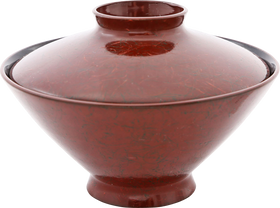
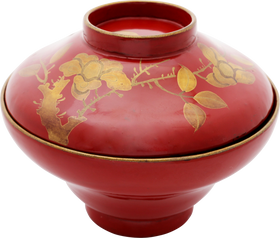
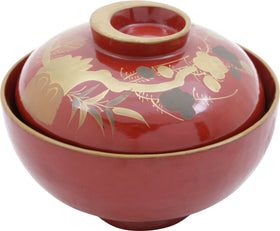
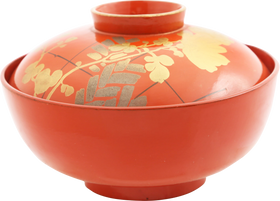
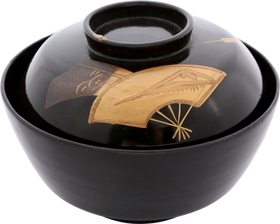
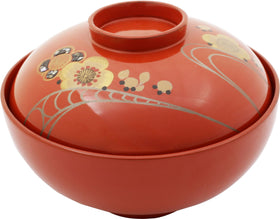
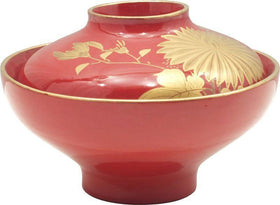
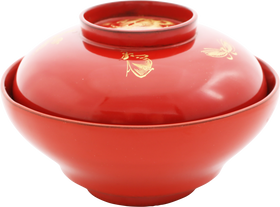
4 1/2” diameter of deep tomato red. The cover decoration of bamboo and thorny floral plants in various shades of gold and silver. The decoration especially profuse and counter pointed by the gold rim of the grip which it surrounds. (read more)
|
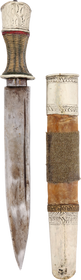
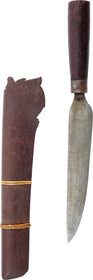
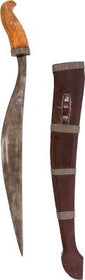
10 1/4” overall with 6 1/8” wedge section blade. (read more)
|
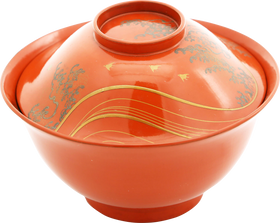
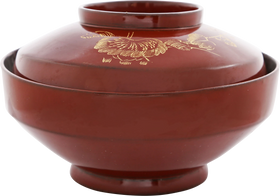
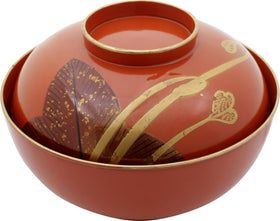
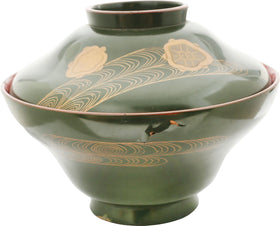
Late Meiji Period. 4 3/4” diameter with delicately flared edges to the gilt rims. Dark pumpkin body color with large gold emerging plant shoots over a gold flecked triple veined leaf. (read more)
|
4 3/4” diameter. The top decorated with a meandering silver stylized river and two clusters of flowers. The foremost detailed in multiple colors, primarily golds with abalone flecks inlaid into the flower petals. (read more)
|
Second half of the 18th century. 7 9/16” wedge section blade finely made with top flat at the forte, overlaid in silver geometric band and top ridge to the point. (read more)
|
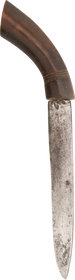
One piece bronze hilt with swelled grip, deep relief floral terminal straight cross guard and ringed dished pommel with minaret terminal. Stone fig. 643. (read more)
|
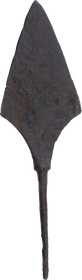
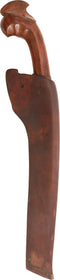
Second half of the 19th century, period of the King and I! 6 length, tapered with pierced spatulate terminal. Flat back and rounded face incised with five hatched bands. Medium brown glossy patina. (read more)
|
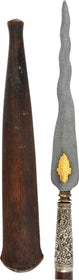
Characteristic small proportions and slender form emulating a blade of grass. 7 3/4” length, 2 1/2 wave with figured base and lineal pamir graining. (read more)
|
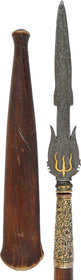
See Stone fig.740, #3. 79 1/2” length. Forged pattern welded steel head with elongated grain pamir. Flared base leaf form on thick baluster support. (read more)
|
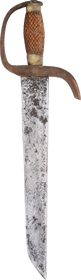
Good quality of characteristic form with two piece bone grip. Laminated multi metal pommel and iron base ferrule. (read more)
|
3 1/2 height. White body with bands of orange cabled decoration. Two gold leaf on orange good fortune symbols. Brown agate top with ivory spoon. Body decoration with some wear from use, mostly on one side. The low foot with pin hole bubbles to the glazed (read more)
|
|