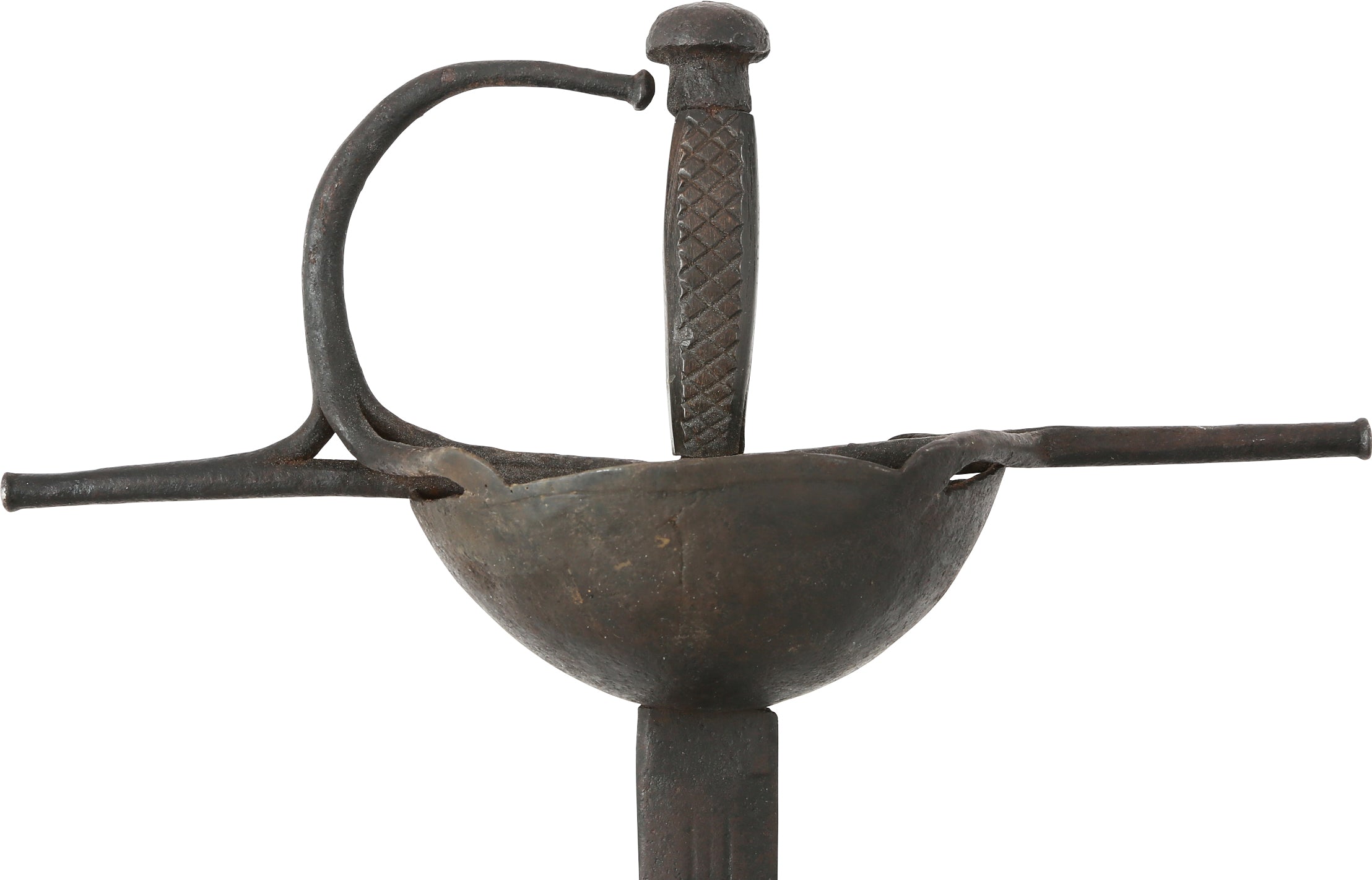
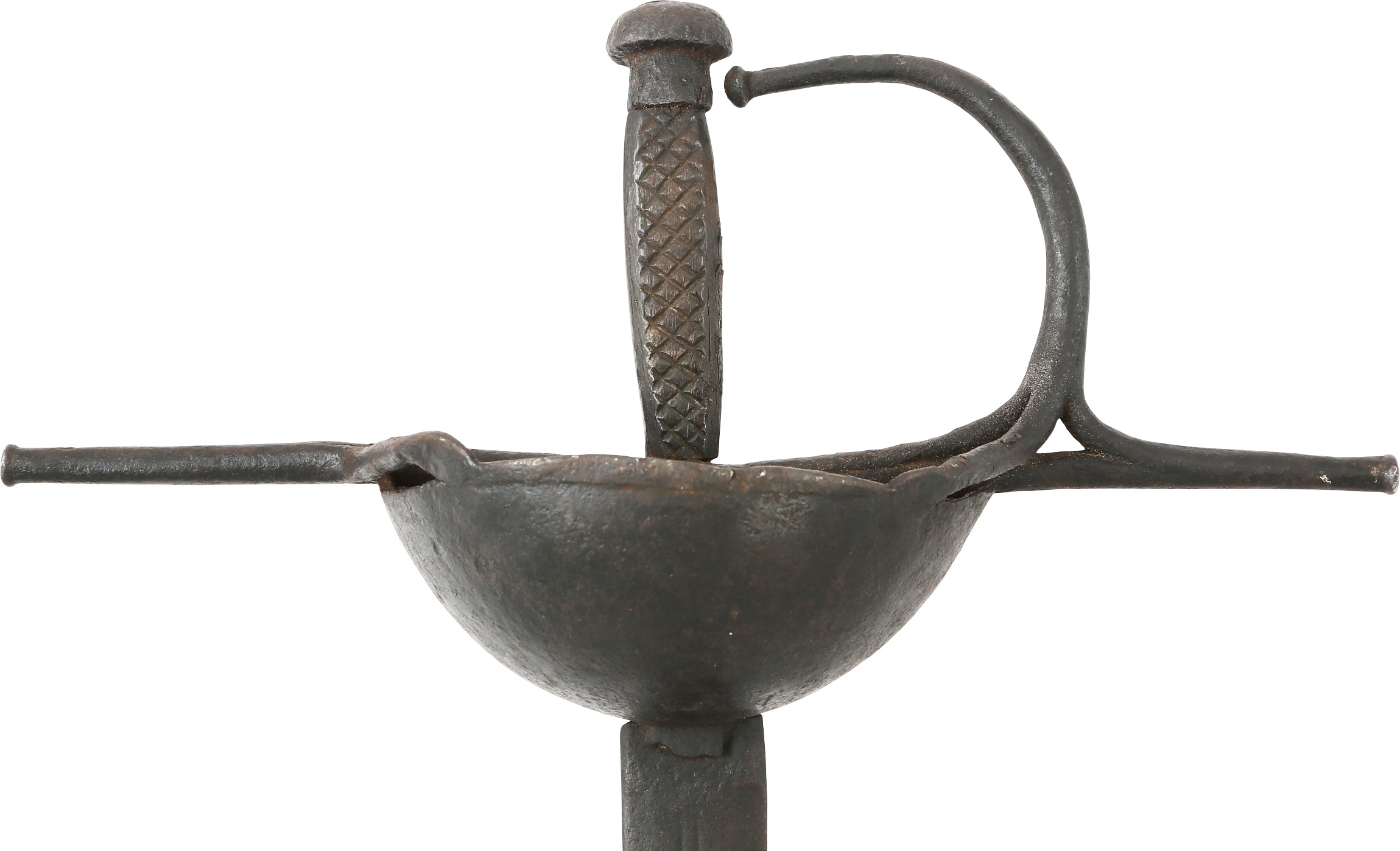
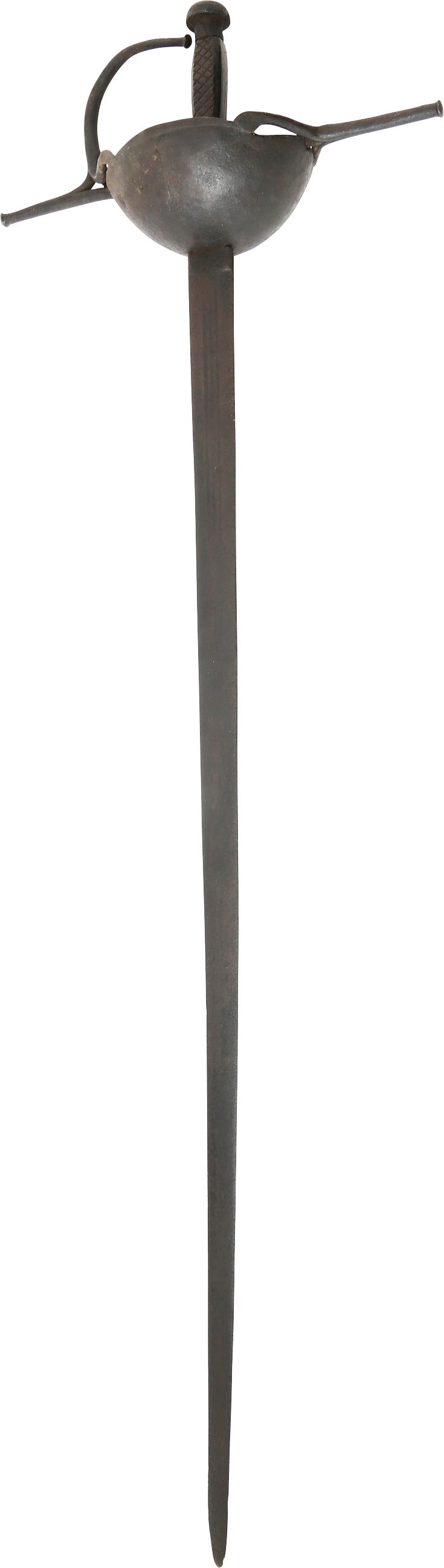
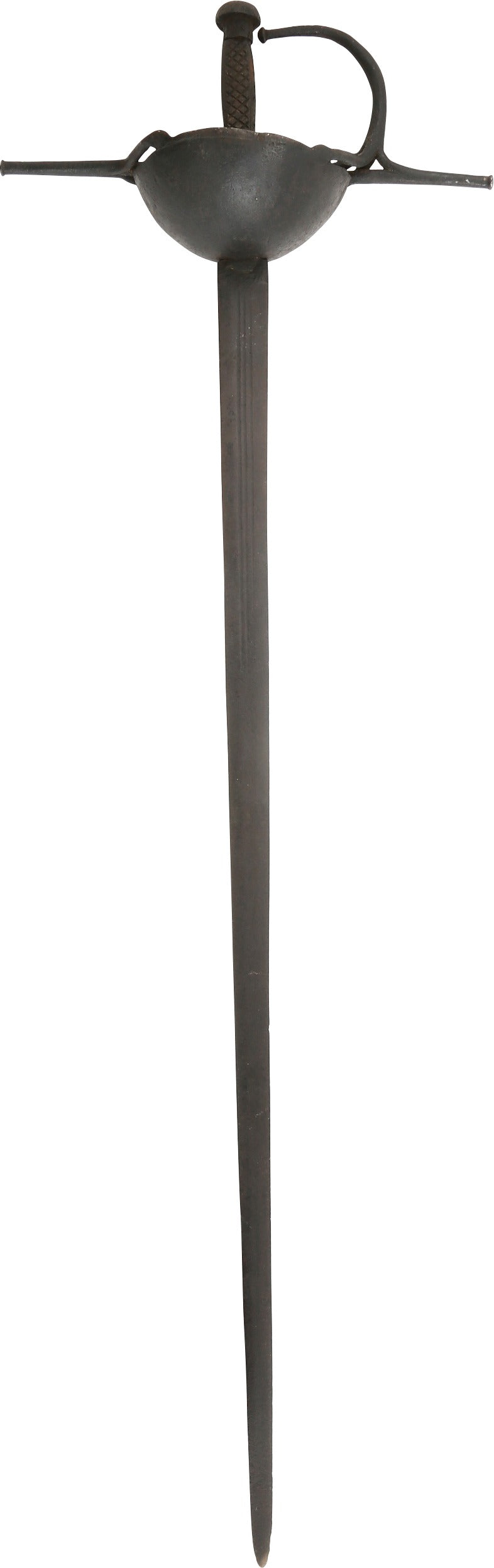
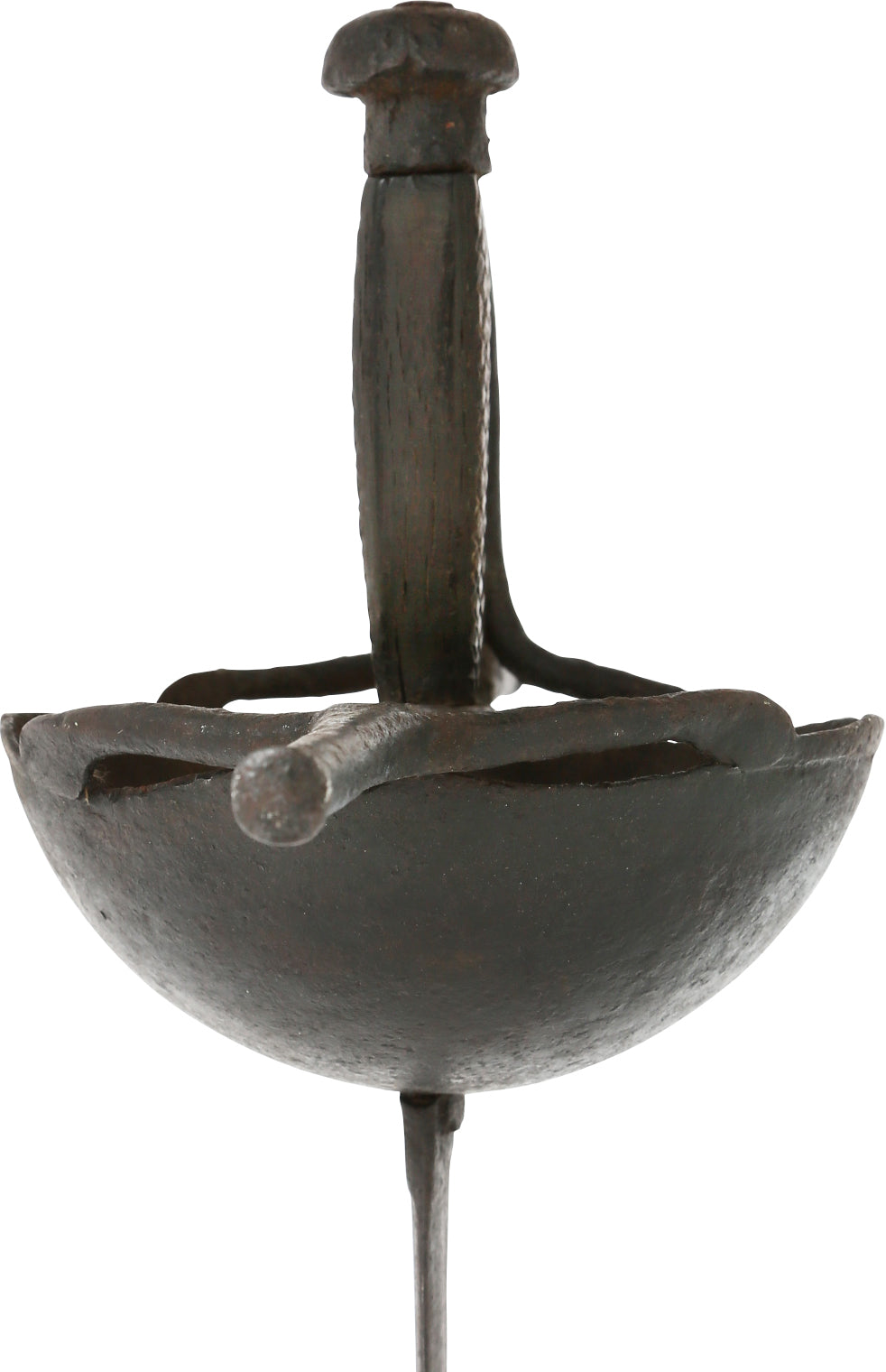
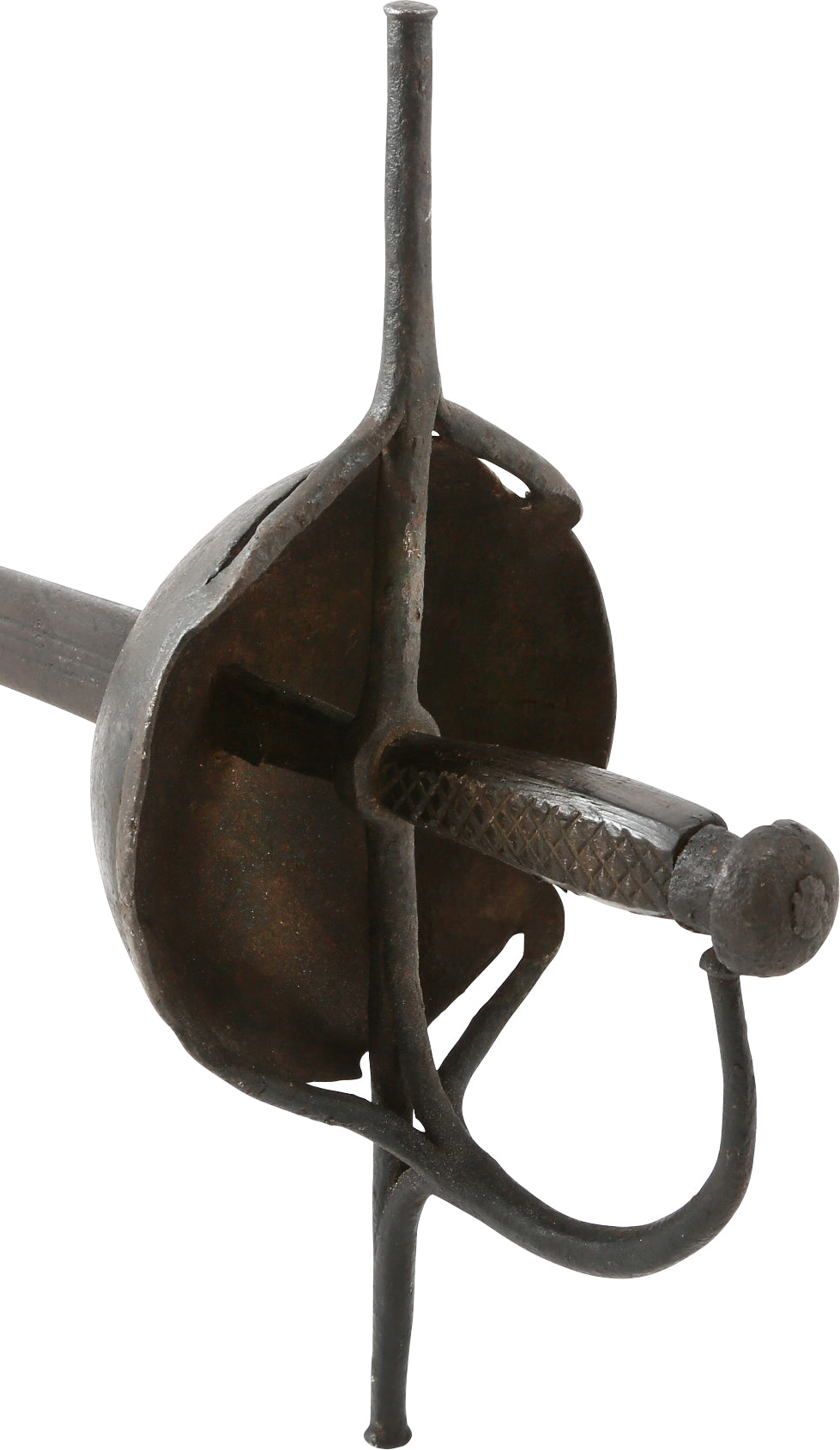
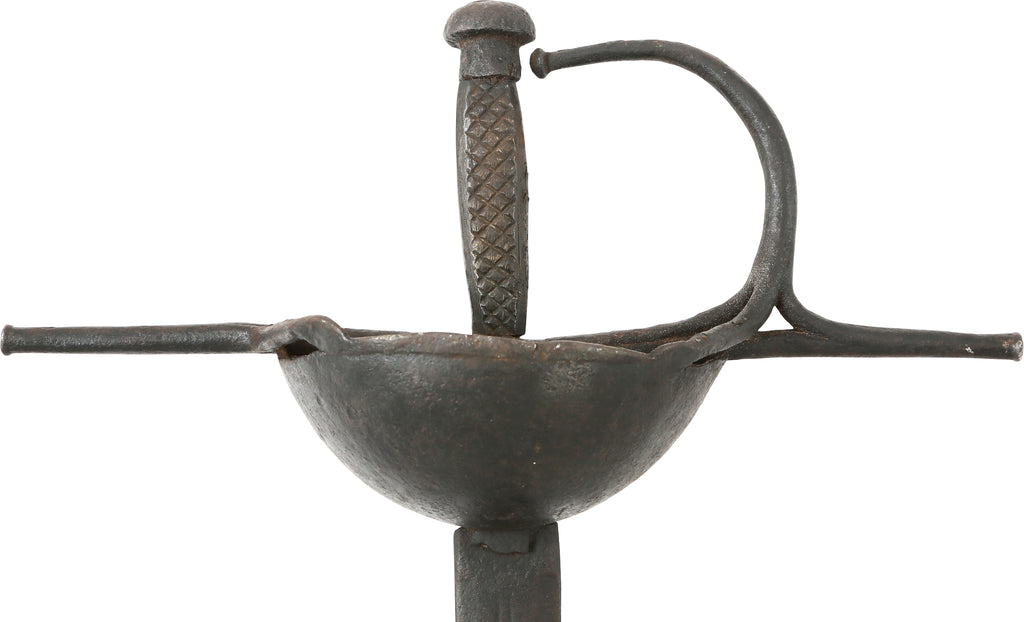
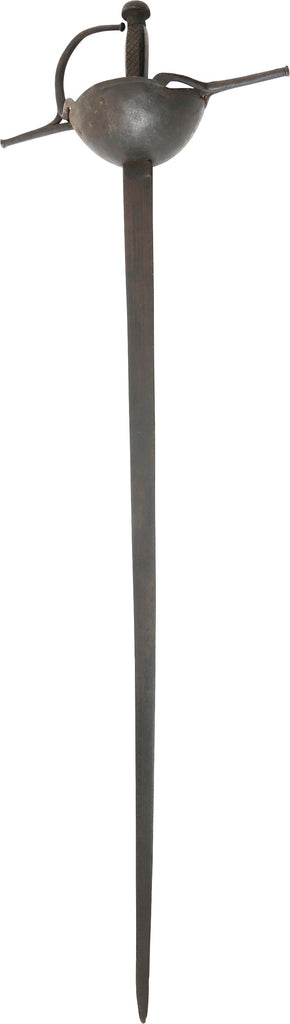
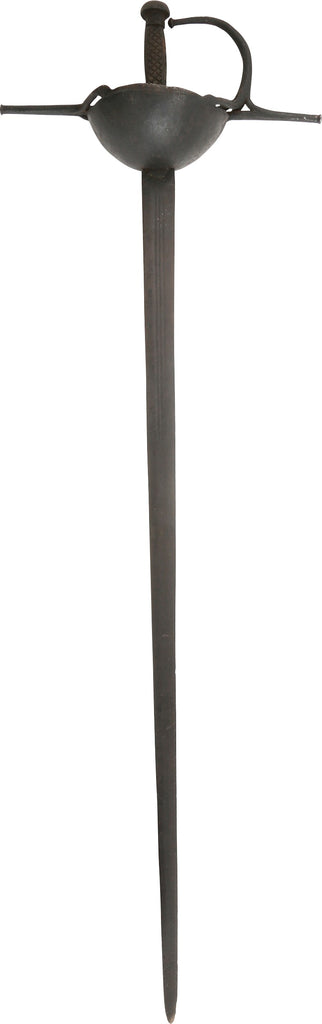
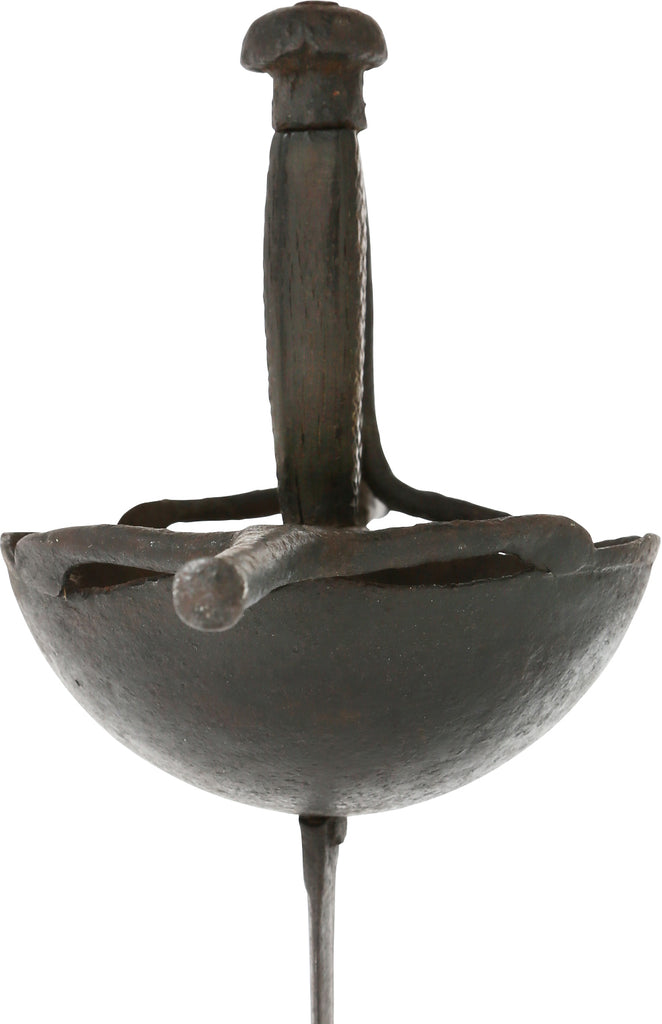
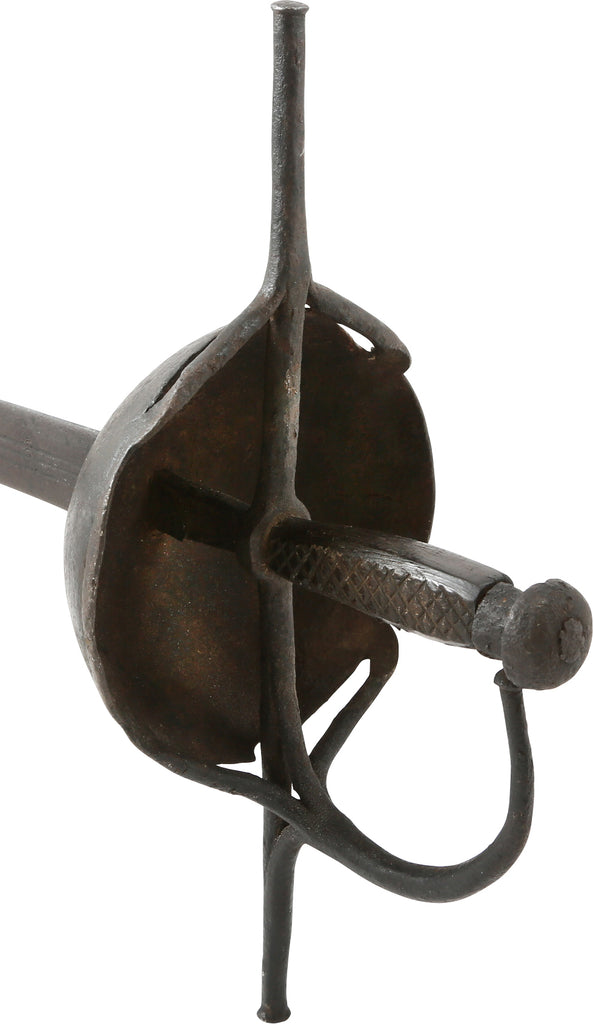
Classic example of the type identified as the first swords made in the New World. These were made in the Caribbean in the 17th century and are well documented in literature including Arms and Armor in Colonial America, Peterson, pl.78, and Spanish Military Weapons in Colonial America, Brinkerhoff & Chamberlain, where the chapter on swords is introduced with an example, pl.125 & 126. These were made by talented blacksmiths, not swordsmiths, and are unlike European swords which were products of groups of specialists, each performing a task repeatedly, they show variations and the effects of handwork. This example represents the group very well for form and workmanship with 36" (outside the cup) triple fullered d.e. blade. Scalloped edge cup with four bars joining the edge to the crossguard. Deep curved knuckle bow and mushroom form pommel. Diced horn grip complete and excellent. The metal uniformly lightly textured with a rich brown patina as typical for arms used at sea. These swords served the Spanish whose primary goal was the capture and transport of gold to the Spanish crown. So substantial was the volume, that it caused a deflation in the world economy at the time. It also generated a fleet of pirates who skillfully scoured the Caribbean for the Spanish treasure ships using stealth, deception, the cover of weather, and the speed and agility of captured ships to overcome their objectives. Fine centerpiece for Caribbean pirate collection.