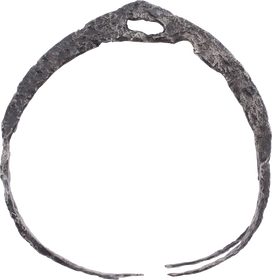
Forged iron 6 1/2” height with backswept bearded form blade. Rounded top eye, elongated at the apex and somewhat asymmetrical as made. Excavated with good uniform texture and no significant losses. (read more)
|
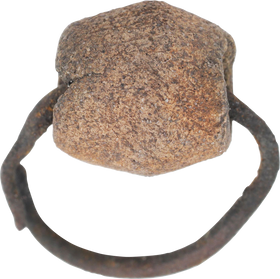
C.700-900 AD. 1 1/2” outer diameter, broad slightly convex section. Incised with alternate toothed and dot motif. Original cross in intact. (read more)
|
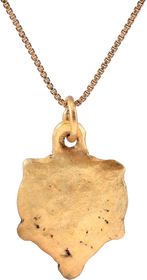
Probably for a woman. Size 7 ¾. Medium width, finely hand worked with six flat diamond shaped panels, each filled with a hatched pattern. (read more)
|
Iron, 3 7/8 length with opened seam conical socket and cusped base triangular point with medial ridge. Sound excavated condition with stable surface oxidation. One edge with two small erosion spots and the bottom slightly degraded as well. Superior p ... (read more)
|
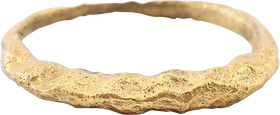
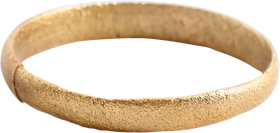
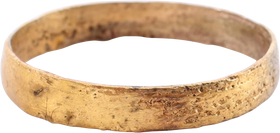
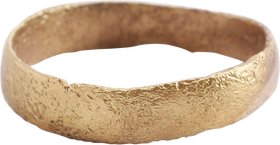
Broad band with unadorned rounded face. Size 10 ½. Bright gold on light texture from burial. (read more)
|
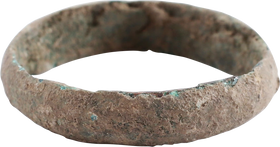
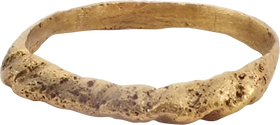
Early period c.800 AD. Ring size 10 ½. Uniform width band with five raised ridges. (read more)
|
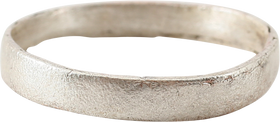
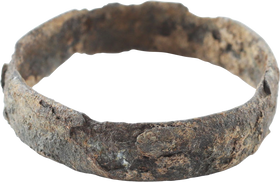
Plain narrow band with slight swelled top decorated with diagonal hatched motif. Sixe 9. Excellent preservation. (read more)
|
3 1/2 length. Thick medial ridged triangular point with angled cusped base. Thick bolster above with conical socket. Fine preservation. The socket only eroded with a void for 1/3 its diameter and 5/8 width. Made to penetrate the leather armor of the ... (read more)
|
19 1/4” overall. 13” s.e. blade. Broad tapered tang to accommodate a guard less built up hilt-the length in this example to allow two hand use! (read more)
|
York England. 4 length with medial ridged leaf shaped point on side seam conical socket. The tip slightly dented form an impact when used. As neither Vikings or Saxons wore armor at the time, it likely struck a rock (of which England is made) missing ... (read more)
|
Early Viking Period, mid 800s and showing Saxon influence. Iron, 6 7/8 length with forge welded seam conical socket. Medial ridged leaf shaped point. Good profile and stable professionally conserved condition with arrested oxidation. The middle of t ... (read more)
|
10 1/4 length. Thick medial leaf shaped head on forged seam conical socket. Excavated with heavy surface texture. About half the socket lacking for the bottom 1 3/4. ... (read more)
|
10 1/2 length. Medial ribbed broad leaf shaped head on forged seam conical socket. Excavated and professionally conserved. Socket complete but for a 1/2 triangle at the base. ... (read more)
|
9th century. 9 1/2 length of thick section . Heavy tapered forged seam socket retains considerable remnants of original wood haft. Low medial ridged blade with flared base. Significant original surface remaining with mostly isolated small oxidation i ... (read more)
|
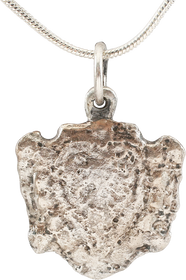
Circular 1 diameter with flat back and half round face with continuous cabled or stylized foliage motif. Surface worn in its working life. Original cross pin. Fine green patina. ... (read more)
|
Circular Just under 1 diameter with flat back and half round face. Silvered bronze with about 50% silver intact and frosty texture. ... (read more)
|
Circular, 7/8 diameter with flat back and half round face. Original cross pin. Fine glossy green patina ... (read more)
|
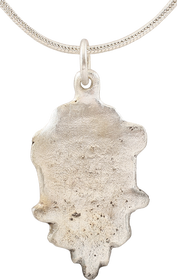
Bronze, 1 1/16 height. High relief opened heart with bottom nub and hat formed top with cross bar and triple indents. Light surface erosion from burial and good green patina. Original cross pin. ... (read more)
|
Bronze with glossy green patina. 1 1/8 dia. with compressed form top and bottom, flanked by bars. The balance in annular lined panels. Original cross pin frozen in place. Could be loosened. Striking example. ... (read more)
|
Fine small example. Just under 7/8 dia, rounded section wit original cross pin. Particularly fine rich glossy patina. ... (read more)
|
7/8 dia., circular section with incised scale texture overall. Tapered cross pin. Lightly cleaned to good red/brown patina. ... (read more)
|
Circular, just under 1 dia. Flat back and low conical front. Original cross pin. Light burial texture. ... (read more)
|
Iron 9 length with tapered tang with curved tip to lock on the grip. Excavated with considerable original surface intact. About the best of these we have had. Vikings farmed in season and Viking farms covered considerable areas of present day England ... (read more)
|
Faceted, hand hammered 3.2 - 4.0 mm. From a group from which we offered a few years ago. These are slightly larger. Each. (read more)
|
866-1067 AD. 6 1/2 length. Crescent form blade on narrow tang. Excavated and professionally conserved with good profile. ... (read more)
|
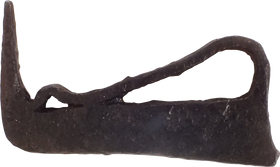
Probably and elongated version of #492 form. 1 1/16 height. Light surface texture and both post tips worn through. (read more)
|
The spring garment fastener developed by the Romans and used through the Middle Ages. Typical bow shape. 2 1/2 length. Rusted with the cross pin partially intact. C850-1050 AD. ... (read more)
|
1 1/2 length. Complete but for the tiny lip on which the pin tip rests. Stable rust overall. ... (read more)
|
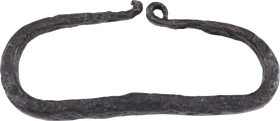
Iron, 2 1/2 length, with thickened striker and tapered terminals folded together providing grip. Very sound with fine surface texture. ... (read more)
|
Characteristic small size, 3 3/4 height to fit the Viking Icelandic pony. See frojel.com page 29 pic. 2 for a near identical example which even shows the identical wear pattern. Broad plate with forged calkins and rectangular nail holes. Very sound e ... (read more)
|