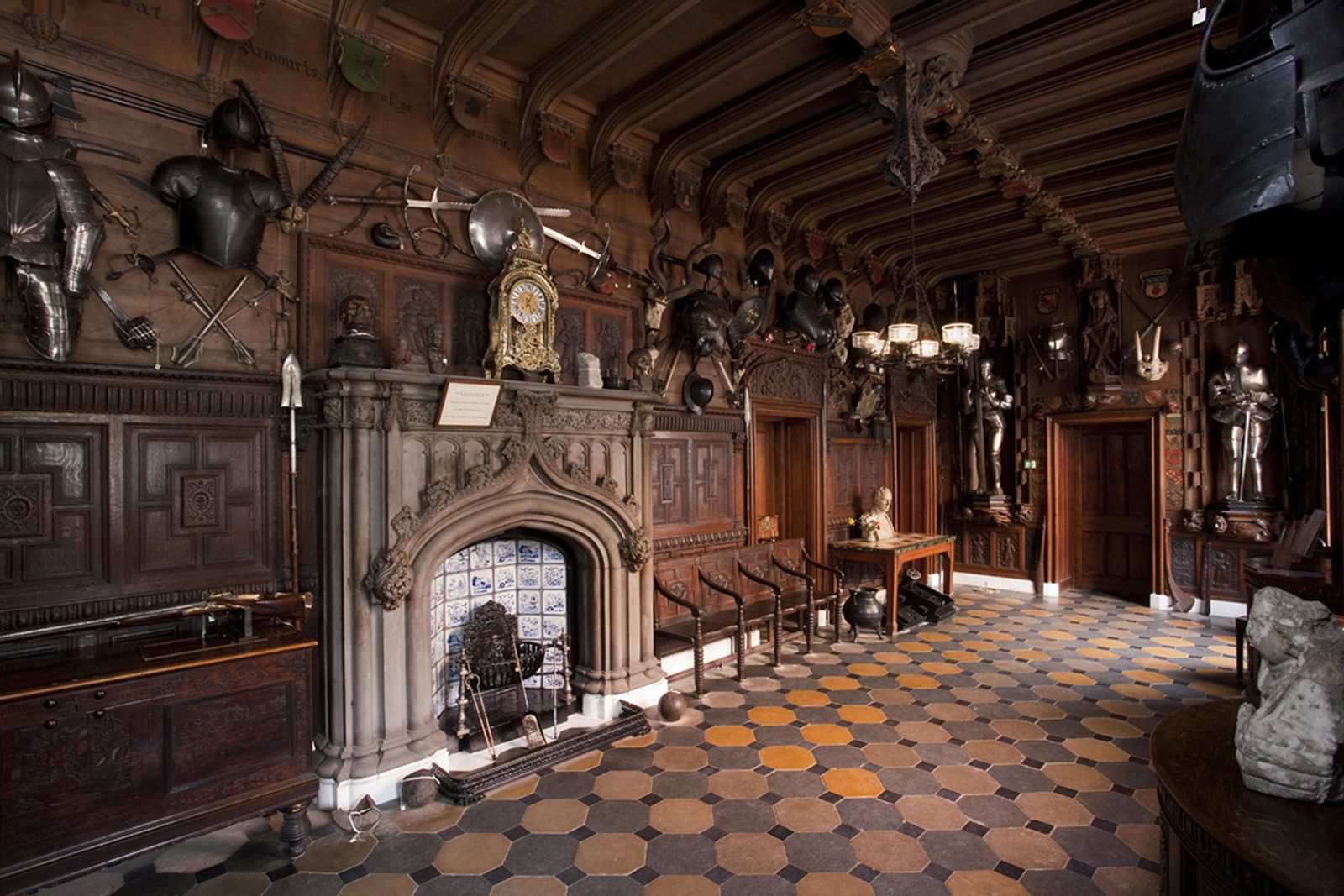
This fine armor was intended to be equally suitable for war or the tournament. For the tournament, it is designed for foot combat in which two adversaries fought armed with poleax or broadsword.
|
The sword with 29 7/8" hollow triangular blade etched with a figure holding an Irish harp and military trophies. The clothing in excellent condition for the period but the waist coat with two angular stains, evidently transferred from a treated leather be
|
This example bears a chiseled iron hilt modeled as a man with the body of a boy in an awkward stance and speculative duel gesture.
|
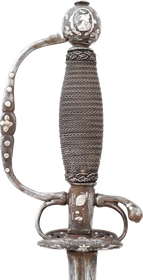
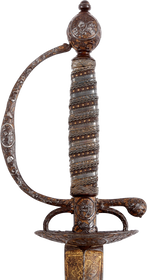
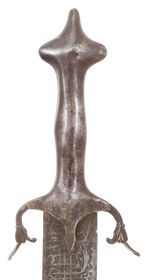
This sword is distinguished by its particularly finely chiseled and pierced iron hilt.
|
This sword is from a well known group studied by A. V. B. Norman. Evidently all were made in Munich and among others, served the the Munich Town Guard.
|
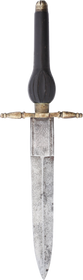
This dagger was used to parry with a rapier in the right hand.
|
The balance of the field is blackened, the transversely stippled brim polished in the "white" as well. The curved brim upturned in fine sweeping terminals. Black and white armor was produced in Germany and used both domestically and exported.
|
Its high rounded upper hilt bar dates this rapier to the first quarter of the 17th century.
|
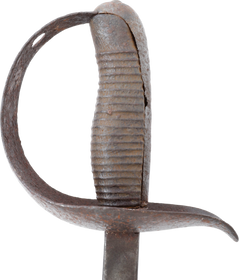
This is a cutting sword designed to be most effective against leather or partial plate armor.
|
The heavy one piece iron skull is large enough to accommodate the internal padding needed for the tilt. The roped comb provides a cushion against a blow or cut.
|
|
The stiff asymmetrical blade served equally well for slashing and thrusting and would have been very formidable in its period before the evolution of full plate armor.
|
Original blackened haft. With no comparables known, this example has puzzled experts for decades. The suggestion that it was used to lead the procession of aristocrats to the gallows is very plausible.
|
This left hand fighting dagger is representative in form of its type but distinguished by its particularly fine inner guard guarda polvo which would show prominently when the dagger was worn sheathed.
|
This fascinating weapon was made by a master sword smith for a boy of about 10 years old who would have had several years of training by the time he owned it.
|
This is a fine example of the swept-hilt rapier as it evolved into larger form suitable for fighting on horseback.
|
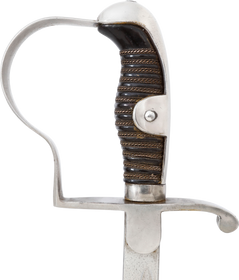
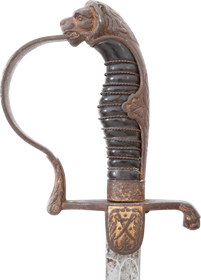
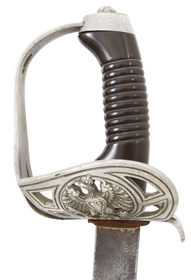
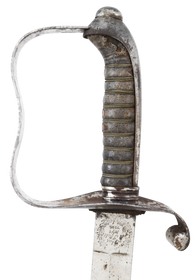
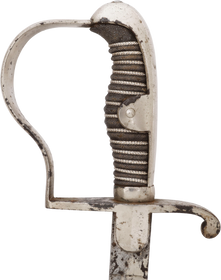
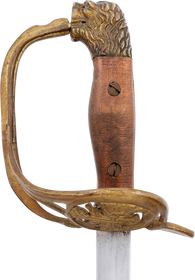
AUSTRIAN M.1861 INFANTRY OFFICERS SWORD. 31 broad fullered curved blade of heavy fighting form shows smooth brown patina, about 60% plating intact. Plated hilt of standard pattern with about 70% plating intact and smooth patina to the balance.
|
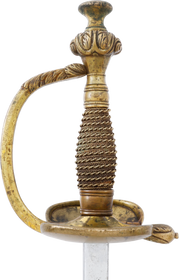
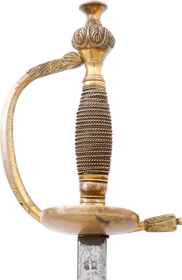
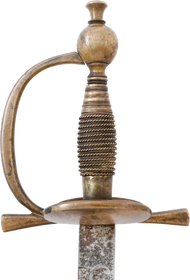
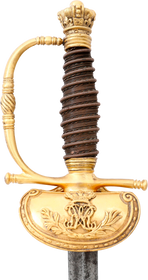
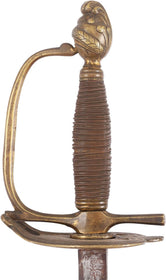
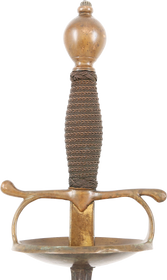
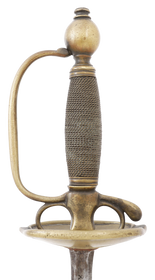
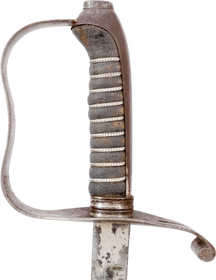
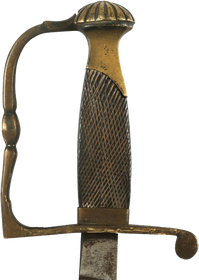
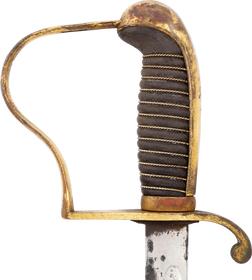
Brass hilt with slotted P form guard and ribbed rolled quillon. 33 curved broad fullered s.e. blade shows medium patina with scattered light pitting and crisp makers marks to the forte. Brass hilt with wire wrapped sharkskin covered grip exc. throughout
|
26" curved blade with narrow back fuller, unmarked, retains its original blade seat. Mostly smooth dark patina mixed with scattered light and medium pitting. Hilt excellent with lovely patina. Very rare form.
|
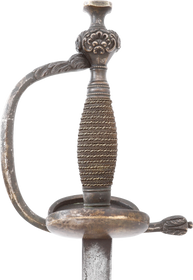
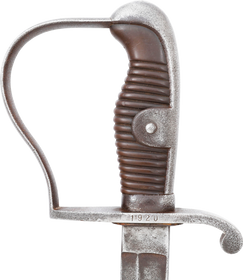
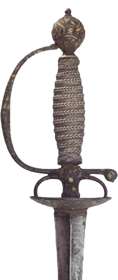
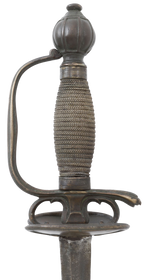
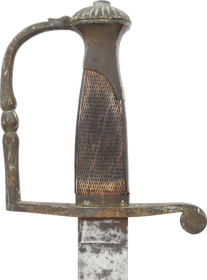
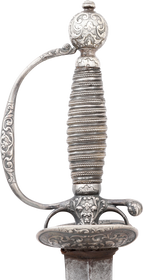
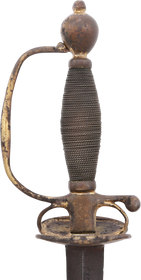
Classic example of this form, Neumann 160.S which was standardized with minor modifications in 1796. This example showing the early form with solid (not hinged) slightly asymmetrical guard.
|
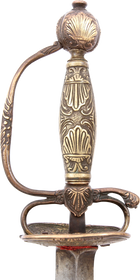
Made without a knuckle bow, this rapier represents a scarce but well documented variation for the period. The pierced and embossed shell guards are decorated with portrait heads of Charles I (1625-49) as was the fashion.
|
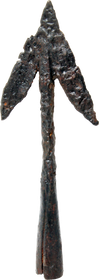
17th-18th century. Forged iron , 5 3/4" n.
|
8" o.a. Flattened cow horn with oval wood base, banded spout. Mounted with triple spanner on short supports to one side. The base pinned through the horn body with cracks in the area. Dark patina throughout. Spanner with light pitting.
|
Napoleonic Period and could have seen service in the War of 1812 as well. 31 3/8" hollow triangular blade, plain, unmarked.
|
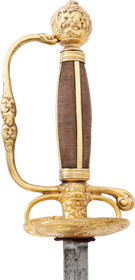
The blade is perfectly plain as made, embodying the latest features including a dramatically widened forte sharply necking to a straight taper out to the point. That form is now referred to as a colichemarde and this example demonstrates it at its extreme
|
22 3/4 curved s.e. blade on unusual section, unedged for the first third and tapering through its length to slender configuration. Long false edge. Hilt exc. with good patina and minor storage bruises only.
|
This elegant swords draws its inspiration from its Mediterranean counterparts.
|
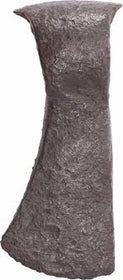
C7th-8th centuries. Classic form with broad wedge section blade with stepped clipped point and near straight edge. 6 1/8 length. Professionally conserved as the above two. Considerable original surface remaining. The classic side knife of the Frankish wa
|
The body made from an antler branch of the red deer with the lower terminals mounted with bone disks secured with bone pegs. Oval top with conical bone spout similarly attached. Engraved overall with characteristic folk motifs the rotating rose and figu
|
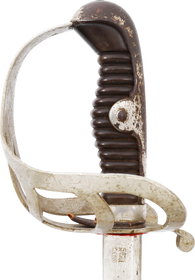
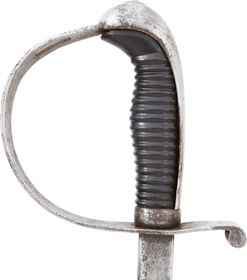
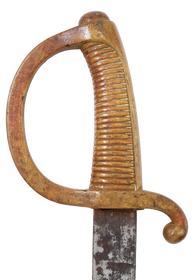
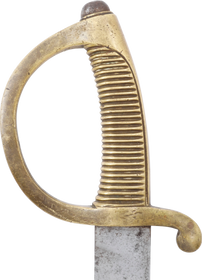
23 1/4 curved wedge section blade with ordnance mark at the forte. One piece ribbed grip brass hilt with iron stud securing the tang.
|