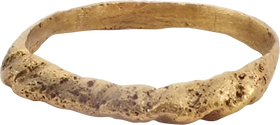
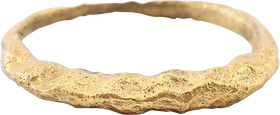
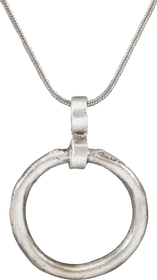
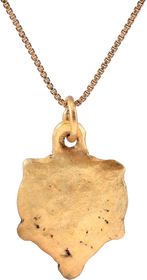
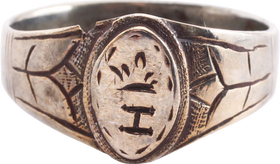
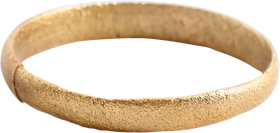
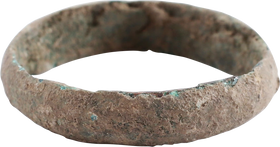
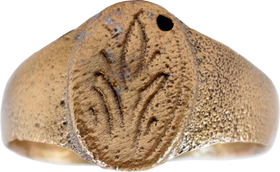
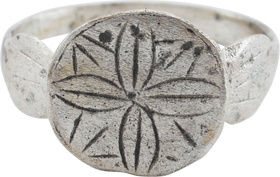
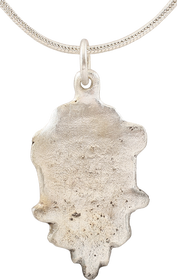
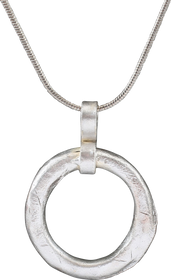
C.500-600 AD. Bronze. Ring size 2 1/4.
|
Lead, four pieces. Cusped rectangular example 1 1/16”, square with edge marked, fine square example with low pyramidal top and a circular example.
|
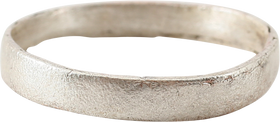
The smallest ring we have offered! Size totally off the chart-several sizes smaller than a US #1, about half the width of a penny, 3/8” inside diameter.
|
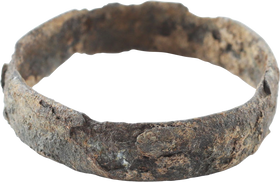
18th century, Woodland, probably Canada. Forged iron, blacksmith made, rounded band with overlap seam to allow for expansion. Size 5 1/2.
|
Zulu Wars period C.1870’s. Known as “Zulu Love letters”. 3 1/4” x 1 7/8 made of trade beads (the Zulu had strong trade ties with the British from the 1820’s)
|
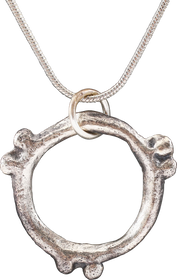
Roman Period, C.1st century BC. 1 1/8” open circular loop with a tassel or wheat sheaf at the front. Green corrosion overall.
|
18th-19th dynasty, 1549-1186 B.C. White steatite, 12 mm (1/2”) length.
|
Would date to the second half of the 18th century. Brass, deeply embossed with the bar sinister motif identifying the bearer as of illegitimate birth.
5 3/8” height “heater” shaped with rolled edge.
|
Second half of the 18th century. Tinned steel, embossed with a lattice armorial motif with alternate squares painted red and brown. Original paint intact.
5 3/8” height “heater” shaped with rolled edge.
|
Early 19th century. 5 1/8” x 3 1/4", loomed with twisted plant fiber thread. Trade beads in bands of blue purple and white with gathered base band.
|
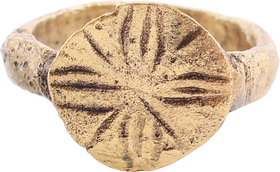
Size 4 1/2 with split band to allow for adjustment. Flared shoulders with raised bezel. The top with facing groups of three radial marks divided by three pips.
|
11th-12th century. Bronze, probably originally gilt. Size 6. Slightly flared convex face band of particularly thick section.
|
11th-12th century. Collected in the Holy Land dating it to pre 1187. Size 3 1/2. Narrow band flared at the shoulder.
|
11th-12th century Size 4. Made for a young man as these were often worn on the small finger.
|
Rectangular with raised edge and pierced for suspension. Embossed central motif of two figures-loaves or fruit. Corner chipped, otherwise excellent.
|
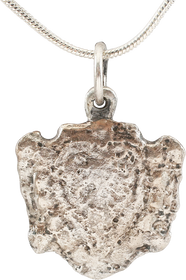
LARGE EXAMPLE. 2 high. Deep relief stipple decorated with two shields. Line bordered to match.
|
3 1/4 x 2 1/2. Decorated in five panels. Four of rows of roses on white lattice field. The fifth (edge) in scrolling geometry.
|
Quite similar and identical proportions. Double circular form. Rectangular base with integral rivet to the back. Green surface encrustation
|
7th-9th century. Bronze, size 9 with broad ridged medial band. The shoulders with chevron decoration. The top of diamond form with four incised circles.
|
Size 4 1/2 with split band to allow for adjustment. Flared shoulders with raised bezel. The top with facing groups of three radial marks divided by three pips.
|
11th-12th century Size 4. Made for a young man as these were often worn on the small finger.
|
Bronze, size 8. The shoulders slightly tapered to the broad convex section band.
|
Classic example of a very specifically identifiable form worn by slaves with the owner's device deeply impressed into the top.
|
Bronze with narrow convex face band and stepped pyramidal top mount simulating a stone. Size 4 1/2.
|
1 3/8” height with bust and identification of the monk. Reverse with inscription surrounding a temple complex. 19th century.
|
19th century, copper, paying tribute to and invoking the blessing of a sainted monk.
|
Size 4 3/4. Broad band with thick raised oval top simulating a stone. Rich patina with slight green coloration in protected places.
|
Yoruba. 2 3/4” dia. Forged iron with very fine twist and double knotted joint.
|
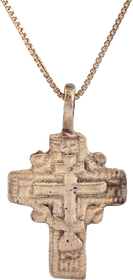
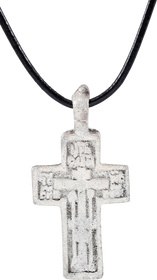
. Mid Gothic form with scrolled or pelleted terminals to the members consistent with Gothic architecture.
|
Mid Gothic form with scrolled or pelleted terminals to the members consistent with Gothic architecture.
|