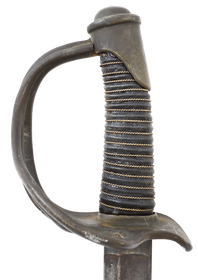
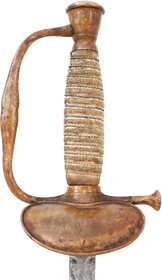
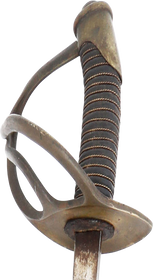
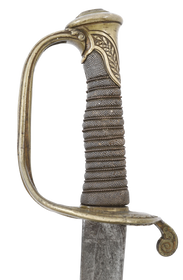
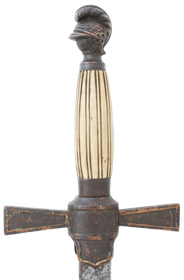
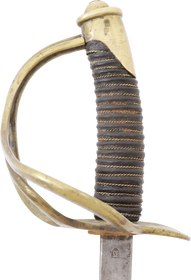
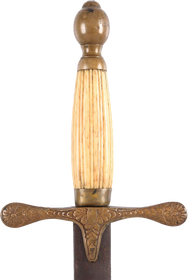
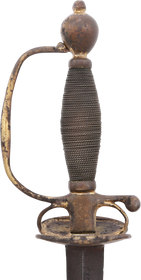
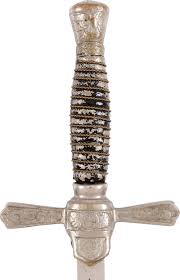
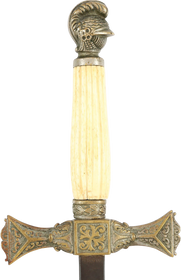
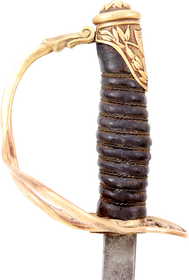
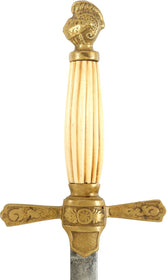
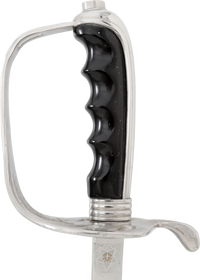
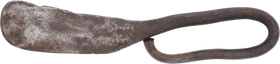
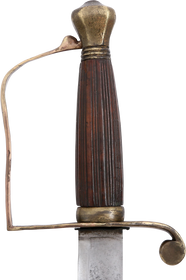
SECOND HALF OF THE 19TH CENTURY. 31 1/2 straight d.e. blade. Cruciform hilt with expanding swallow tail terminal cross guard and inverted pear shaped pommel. Wire wrapped grip.
|
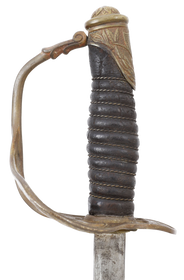
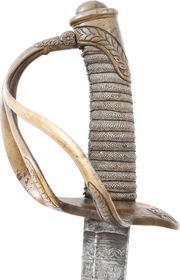
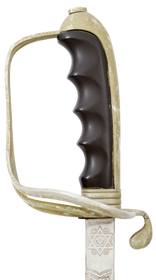
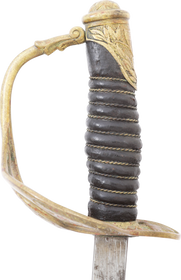
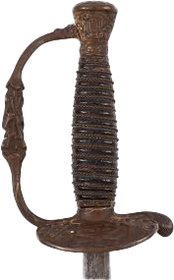
Oval guard with hand engraved toothed fall. 4 1/2" diamond section blade. Silver scabbard with oval frog stud.
|
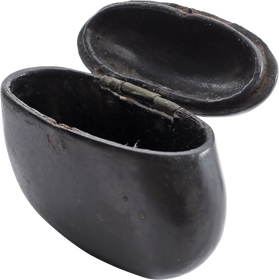
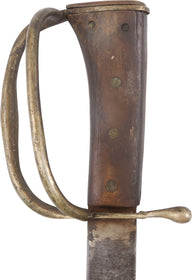
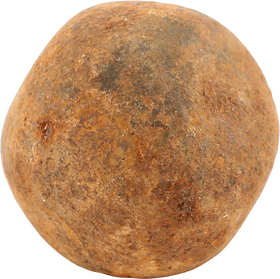
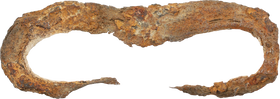
4 1/2 x 2 1/2. Unedged with some scratches from use. From a South Carolina find, certified authentic and surely Confederate.
|
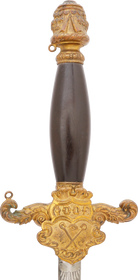
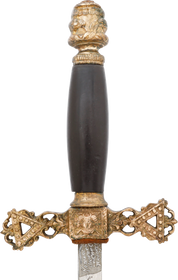
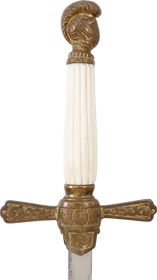
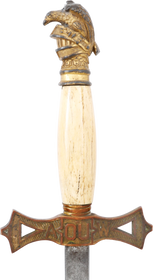
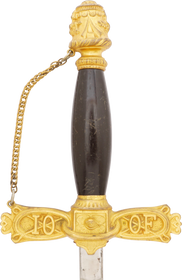
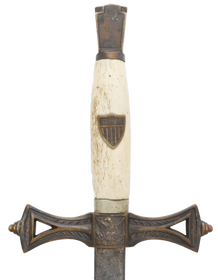
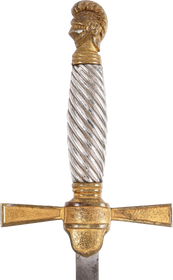
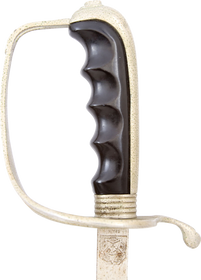
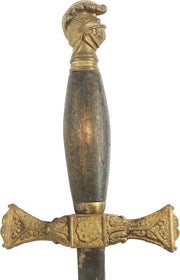
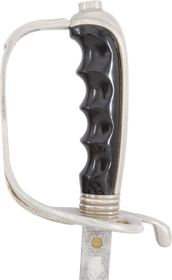
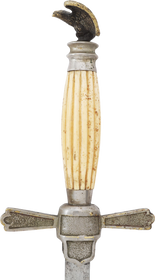
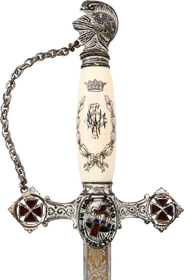
This Knights of Pythias sword made by James Luker, NY (163 Grand St.) dates to the second half of the 19th century when many members were Civil War veterans. The 30 d.e. blade is etched more than half its length both sides including the owners name.
|
Excellent with good age patina throughout and plating near complete. Second half of the 19th century.
|
Carved wood, 9 3/4 and 11 3/4 respectively representing the two forms of fighting knives, the large single edged Bowie and the double edged spear point Arkansas Toothpick.
|
5/8 d.e. diamond section blade with crude brass inlaid design each side at the forte. Shows smooth gray patina with some lineal forged layering. Inlay weak as made but complete. Recurved forged iron guard with scroll terminals and matching domed pommel c
|
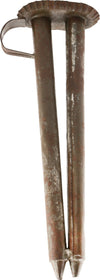
Dating C.1640. Concealed within the large felt hats worn by civilians and soldiers, including officers, alike. 7 3/4 width completely hand forged and chisel cut.
|
Wrought iron, 13 3/4” length, with leaf shaped medial ridged blade and opened seam conical socket. The junction with a well forged raised chevron.
|
Were $5.00 each. Now 2 for $5.00
Produced by the Scotten Dillon Tabacco company, Detroit, founded in 1858.
|
Were $5.00 each. Now 5 for $10.00
Produced by the Scotten Dillon Tabacco company, Detroit, founded in 1858.
|
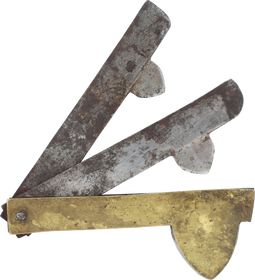
Identical to Neumann P.187 #4, right. Cow horn slab sides with brass spine. Three folding blades with graduated spade shaped points which were punched through the skin to create a bleeding wound in order to “lighten the burden on the heart”.
|
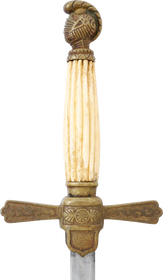
Superior quality for an officer of means. Brass, delicately made with stylized flower buds at the corners. 2 1/2” width. Crisp with remnants of gold overlay. Cross bar missing.
|
Classic blacksmith or cottage industry New England made example with features unique to this type. Lathe turned walnut grip of tool form with plain brass base ferrule.
|
5 7/8” blade with long clipped point, unmarked. gutta percha or hard rubber, textured to simulate stag antler on thick tapered tang. Grips slightly shrunk from age.
|
The Molly Maguires defaced and disgraced! As would be expected for any secret society, facts about their activities are outweighed by speculation. Still the result was that in the years 1876-78, numerous Mollies were tried for crimes and many executed.
|
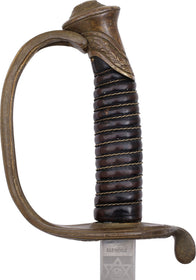
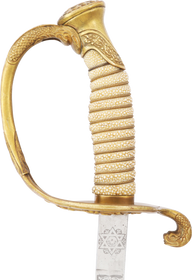
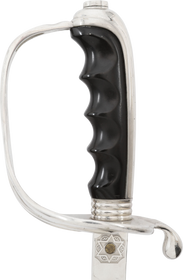
Standard pattern (P.52) with 21" leaf shaped blade with weak U.S.N. marks to reverse.
|
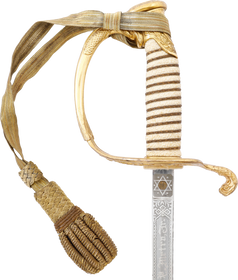
The sword of Lt. Arthur Whitfield Huguley, US Coast Artillery who also played football for Harvard. Standard pattern, the blade etched near full length both sides including Boston retailer’s name.
|
It is little known that the American Civil War precipitated the largest expansion in U.S. postal service to date.
|
It is little known that the American Civil War precipitated the largest expansion in U.S. postal service to date.
|
It is little known that the American Civil War precipitated the largest expansion in U.S. postal service to date.
|
It is little known that the American Civil War precipitated the largest expansion in U.S. postal service to date.
|
It is little known that the American Civil War precipitated the largest expansion in U.S. postal service to date.
|
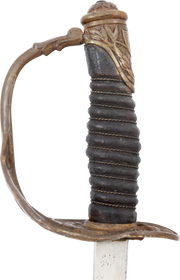
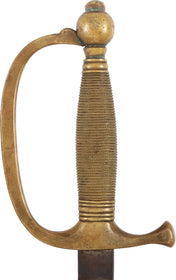
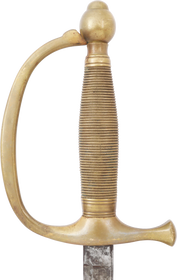
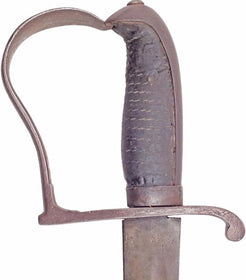
Brass hilt with P form guard slotted for a knot. Integral back strap and pommel.
|
Leather, hand stitched with central compartment, 9” width, with cartridge loops to both side. Additional line tooled pocket to the face for additional storage.
|
Size 7. Plated copper/bronze with narrow band supporting a deeply ribbed compressed conical top mounted with a deep purple “stone” probably glass. Small central chip to the stone, worn over in its working life.
|
Size. 8, silver, nickel or a related alloy. Hand made with sand cast texture to the interior. The surface polished and incised with flower head surrounded by crescent punched borders each side.
|
Large size 10 1/2. Narrow band transitioning to radially fluted shoulders, the central segment of each with hand engraved hatched field.
|
Pattern used through the Civil War and continued until the present. Gilt hilt with dolphin head quillon and oak foliage pierced guard with USN in ribbon.
|
Bronze. Sand cast under primitive conditions. Narrow band with radially fluted shoulders and four large mounting points gripping a blue “stone” probably glass.
|